
SEC-seq reveals translation-focused metabolic strategies for high IgG productivity in clonal CHO cells
Jasmine Tat, Fides D. Lay, Jennitte Stevens, Nathan E. Lewis
bioRxiv, April 2026
Abstract
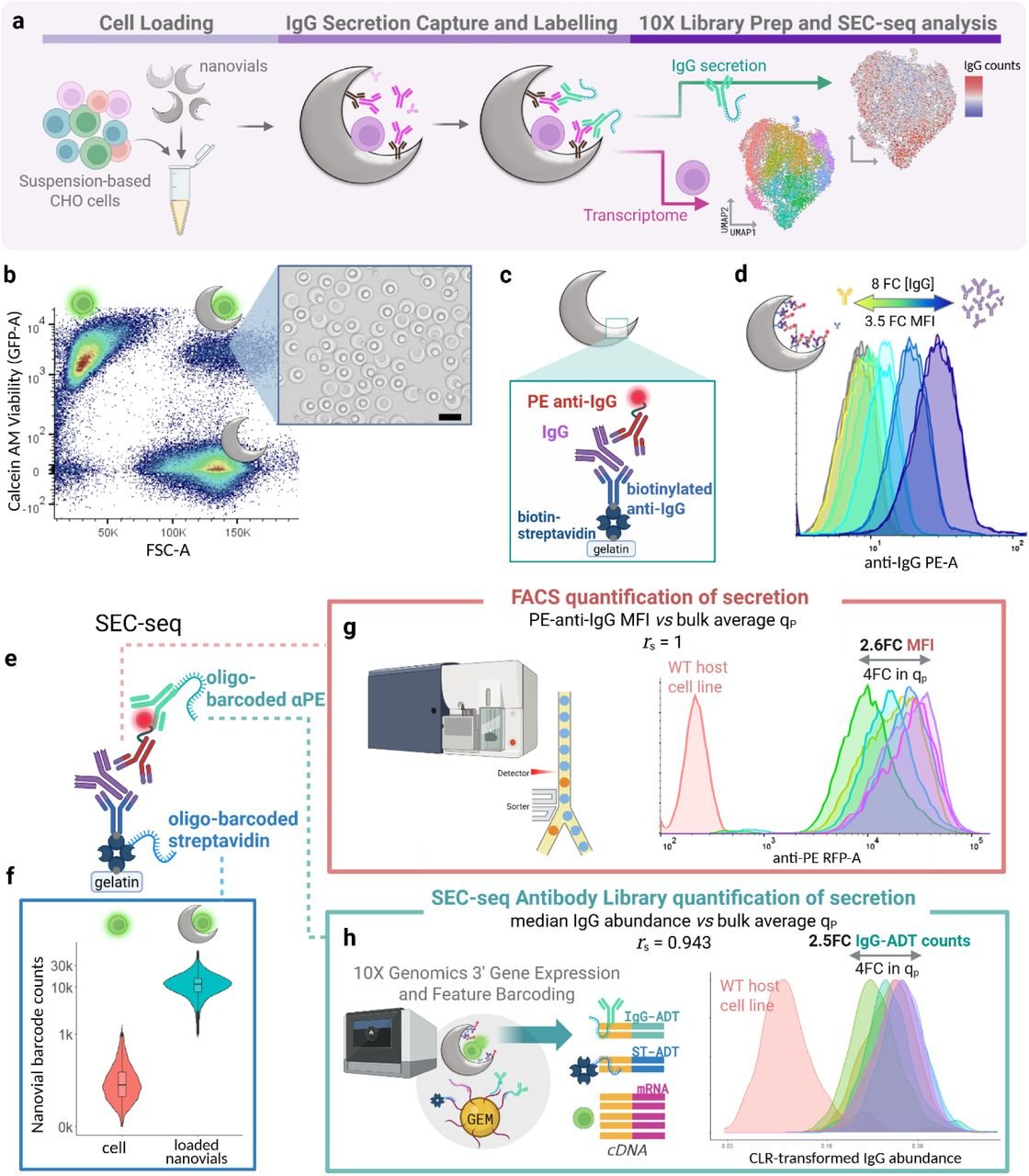
Chinese hamster ovary (CHO) cells are the dominant host for therapeutic protein production, yet intra- and inter-clonal heterogeneity in manufacturing phenotypes, and the underlying metabolic and secretory circuitry, remain poorly defined at single-cell resolution. Here, we apply secretion encoded single-cell sequencing (SEC-seq) to simultaneously measure transcriptomes and secreted IgG in single-cells from a parental production cell line and five CHO clones, each varying in cell-specific productivity. IgG mRNA and recombinant protein secretion are only moderately correlated across single cells, indicating that transcription alone does not explain intra-clonal secretion heterogeneity. By integrating SEC-seq with single-cell metabolic and secretory task scoring, we find that CHO cells accommodating recombinant protein expression burden have more active translation-associated pathways and suppressed energy-intensive endogenous secreted protein processing. Three high-secreting clones converge on this translation-focused state but differ in their subpopulation composition and energy/redox programs coupled to IgG output: one highly productive clone shows a low-growth, glycolytic, NAD/one-carbon–associated and UPR-activated program; a second shows increased oxidative phosphorylation and fatty-acid β-oxidation, and a third shows higher lipid-uptake with modest central carbon metabolism. Genes such as Aldoa, Ndufab1, Acsl5, Mthfd2 showed clone-specific correlations with IgG, linking glycolysis, mitochondrial respiration, fatty-acid metabolism, and redox to secretion. Together, these results demonstrate that SEC-seq can resolve IgG-coupled metabolic-secretory wiring within and between CHO clones, providing a framework to identify subpopulation and circuit features to engineer or select for improved recombinant protein production.
Topics
SEC-seq, Cell Line Development, Antibody Secretion
Cell Types
Clonal Chinese hamster ovary (CHO) cells
Secretion Targets
IgG