

Cancer Biology
Reveal Functional Heterogeneity in Cancer
Molecular profiling can reveal cellular identity and potential, but cancer progression and treatment response ultimately depend on cell behavior. Tumor cells can differ in what they secrete, how they respond to therapy, and how they interact with surrounding immune and stromal cells—even within the same molecularly defined population.
Measuring these functions at single-cell resolution can uncover rare, disease-relevant phenotypes that are masked by population averages. By recovering the cells behind each phenotype, functional behavior can be connected to the molecular programs associated with tumor progression, treatment response, and resistance.
The functional dimension of tumor biology
Characterize Tumor Secretomes, Cellular Interactions, and Treatment Response

Nanovial assays support function-based analysis across diverse cancer models—from secretion by individual tumor cells to responses that emerge under therapeutic pressure or through defined cellular interactions.
Tumor Cell Secretomes
Characterize cell-to-cell variation in protein secretion and identify subpopulations with distinct secretory profiles. Compare secretory activity across cancer models, cell states, perturbations, and microenvironmental conditions.

Cellular Interactions in the Tumor Microenvironment
Assemble defined tumor–immune or tumor–stromal cell pairs using Nanovial Multicell Assays. Investigate binding, cellular activation, and secreted responses associated with specific interactions.

Therapeutic Response and Resistance
Compare functional phenotypes before and after therapeutic exposure. Identify cancer cell populations that retain, lose, or alter a measured function under treatment to investigate response, persistence, and resistance.
Functional Biomarker Discovery
Define molecular features associated with measured cellular phenotypes. Identify candidate biomarkers that distinguish disease-relevant secretory states, treatment responses, or interaction-dependent behaviors.
Discoveries enabled by Nanovials in cancer research
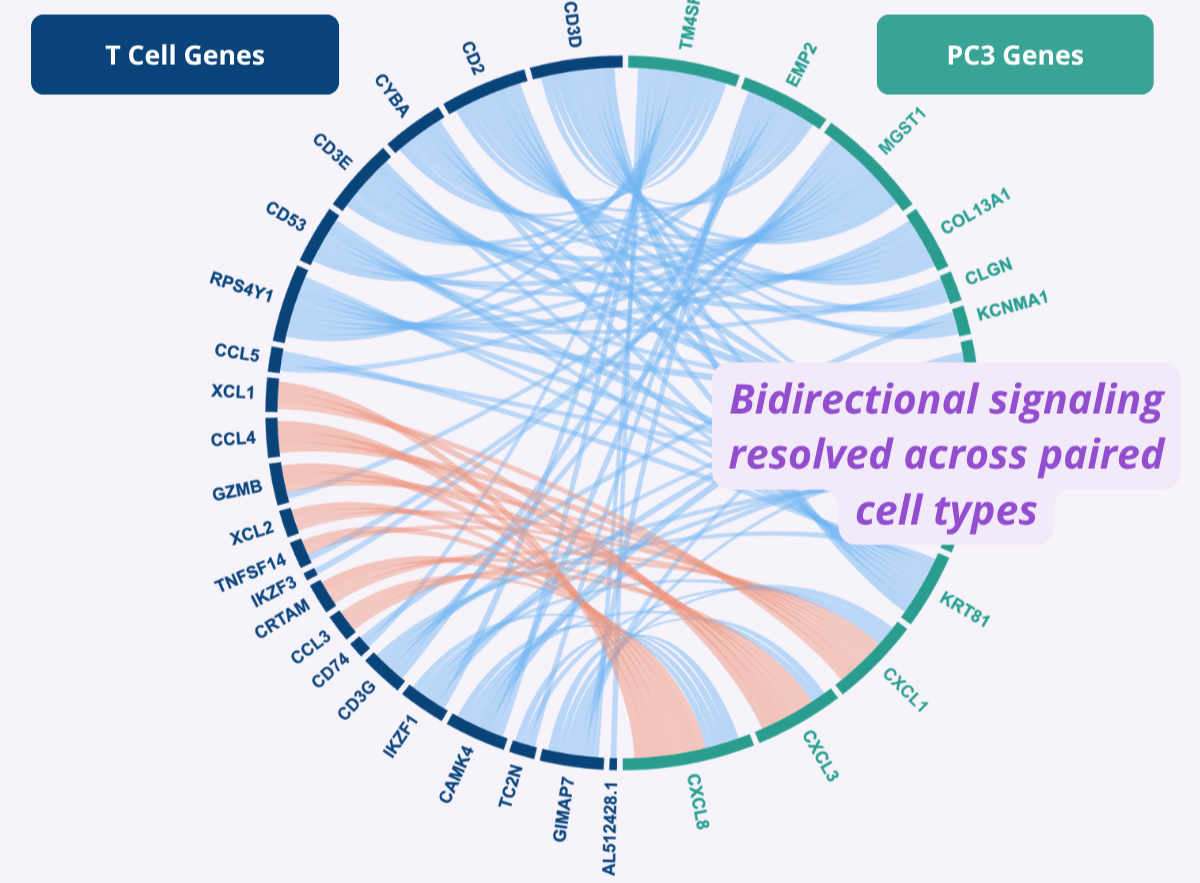
Emergent programs in tumor-T cell dyads
Nanovials preserved partner identity and contact timing across thousands of prostate tumor–T cell dyads. It revealed transient activation programs obscured in bulk coculture, coordinated chemokine signaling, and an inverse relationship between tumor immunoregulatory programs and T-cell activation.
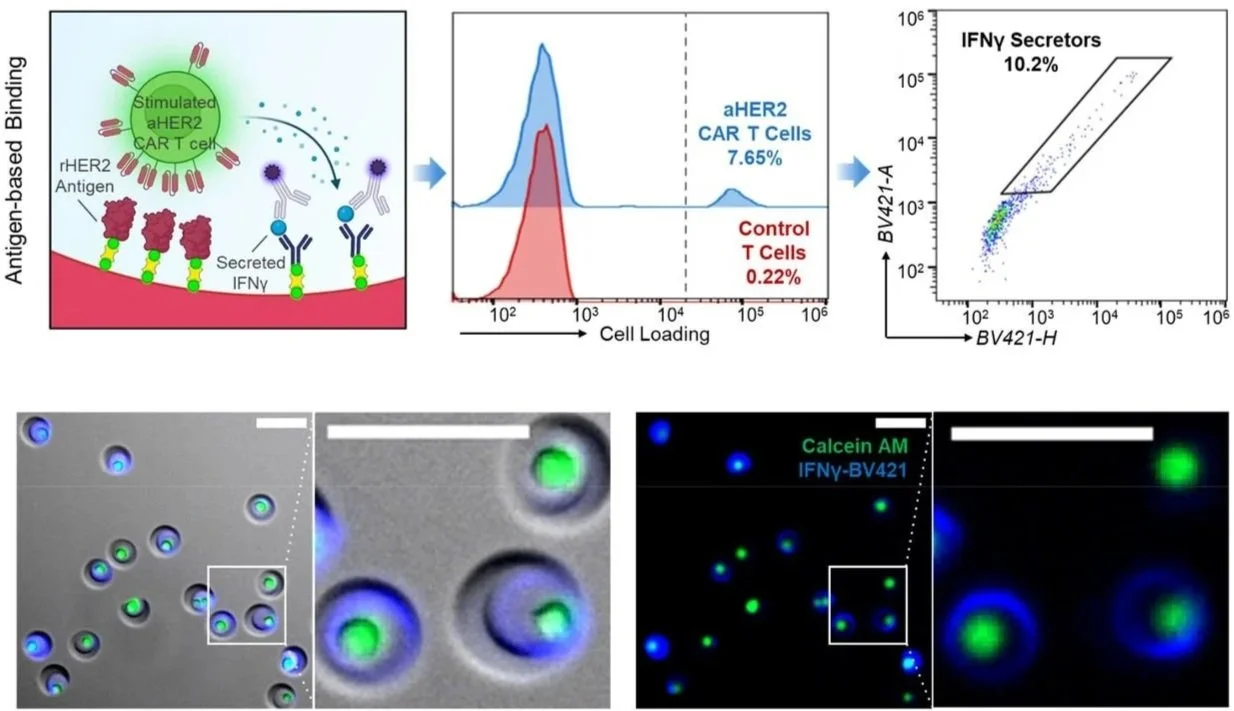
Time-dependent functional differences across CAR-T designs
Nanovials screened more than two million cells from a 32-variant CAR-T library based on antigen-dependent IFNγ secretion. IL15RA-containing CARs were enriched early, while CD40-containing designs showed later enrichment, revealing distinct response kinetics across constructs.
Cancer Research Resources
Datasets, publications, and protocols for studying tumor cell biology.
Find the right Nanovial workflow for your assay
Developer kits for
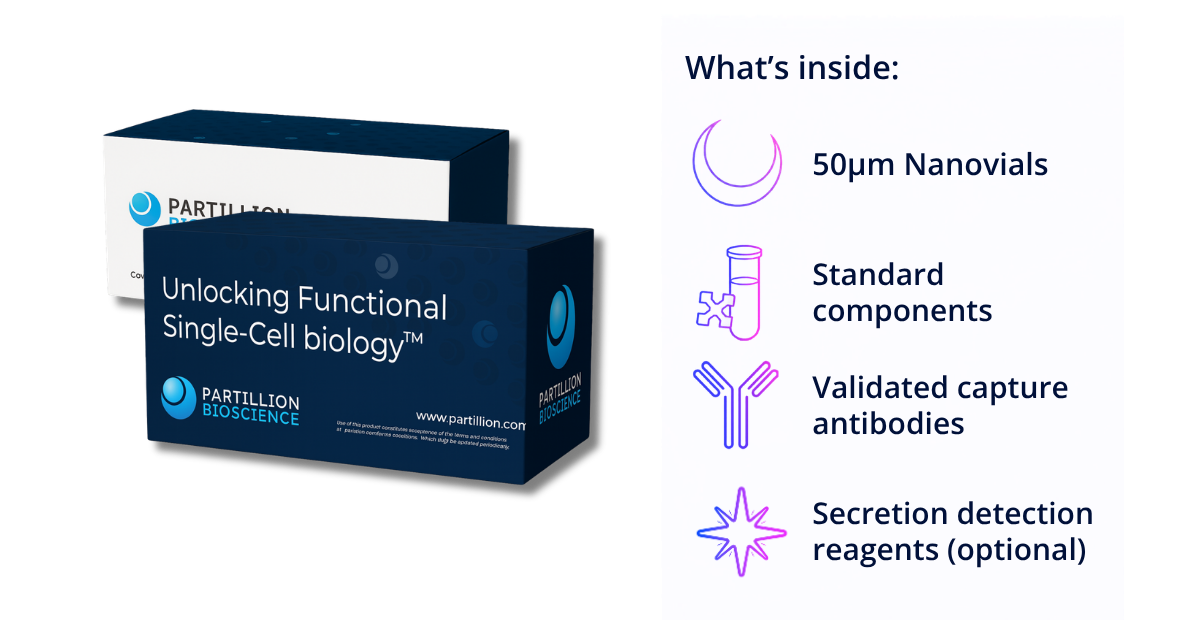
Single-Cell Secretion Assays
Profile cytokine and chemokine secretion from individual tumor or immune cells.
Developer kits for
Multicell Interaction Assays
Pair tumor cells with T, NK, or CAR-T cells to isolate cell dyads and measure contact-dependent killing and signaling.
Ready-to-use kits for screening tumor-specific B cells, plasma cells, or recombinant libraries to identify binders targeting novel tumor antigens and immune checkpoints.