
Cell-Cell Interactions
How cells recognize, communicate, and shape each other’s behavior
What are cell-cell interactions?
Cells influence each other through contact, signals, and response.
Cell-cell interactions describe how cells recognize, communicate with, and change one another’s behavior. These interactions can happen through direct contact, secreted molecules, receptor-ligand binding, or functional responses between neighboring cells.
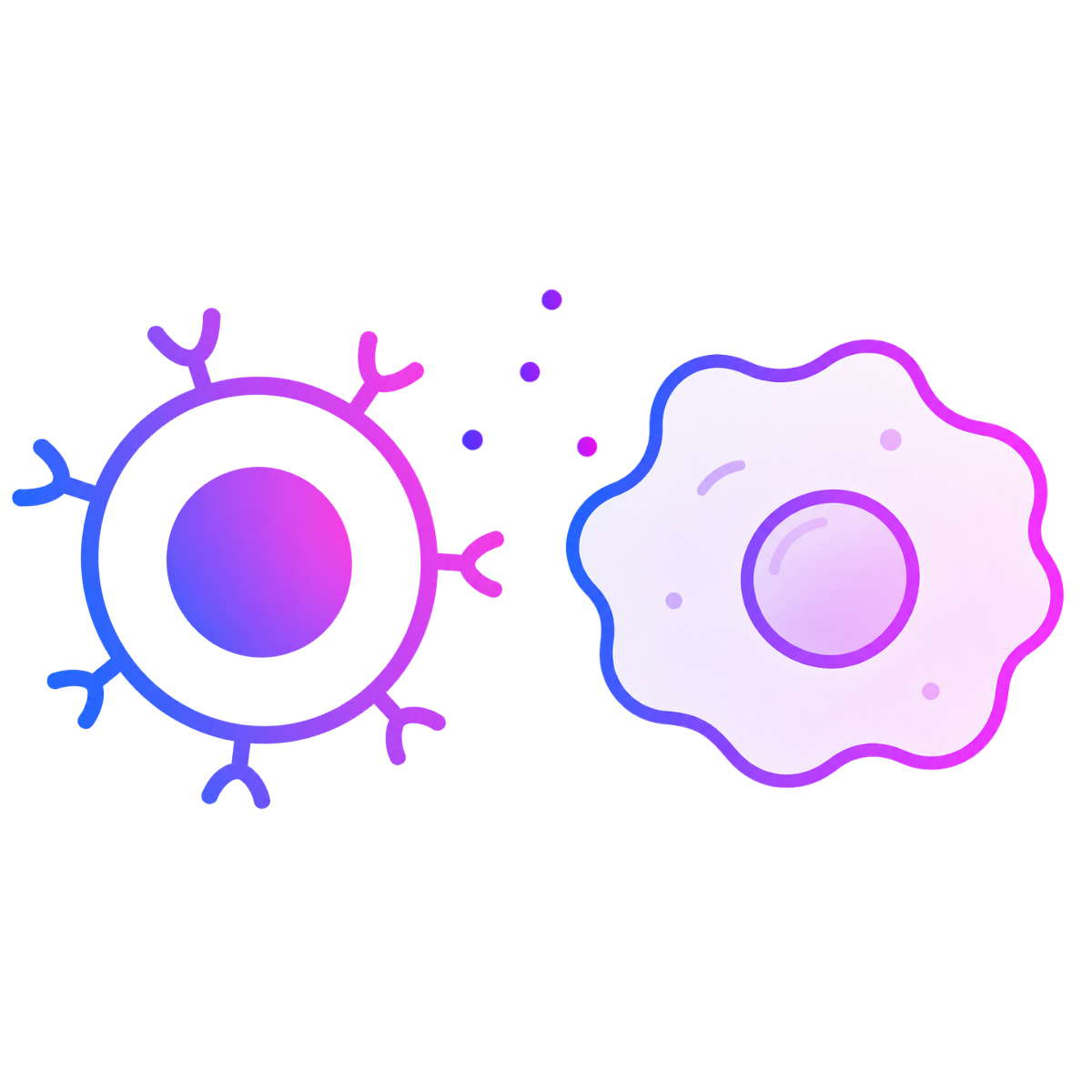
Recognize
Cells identify partners, targets, or neighboring cells through surface cues and contact.
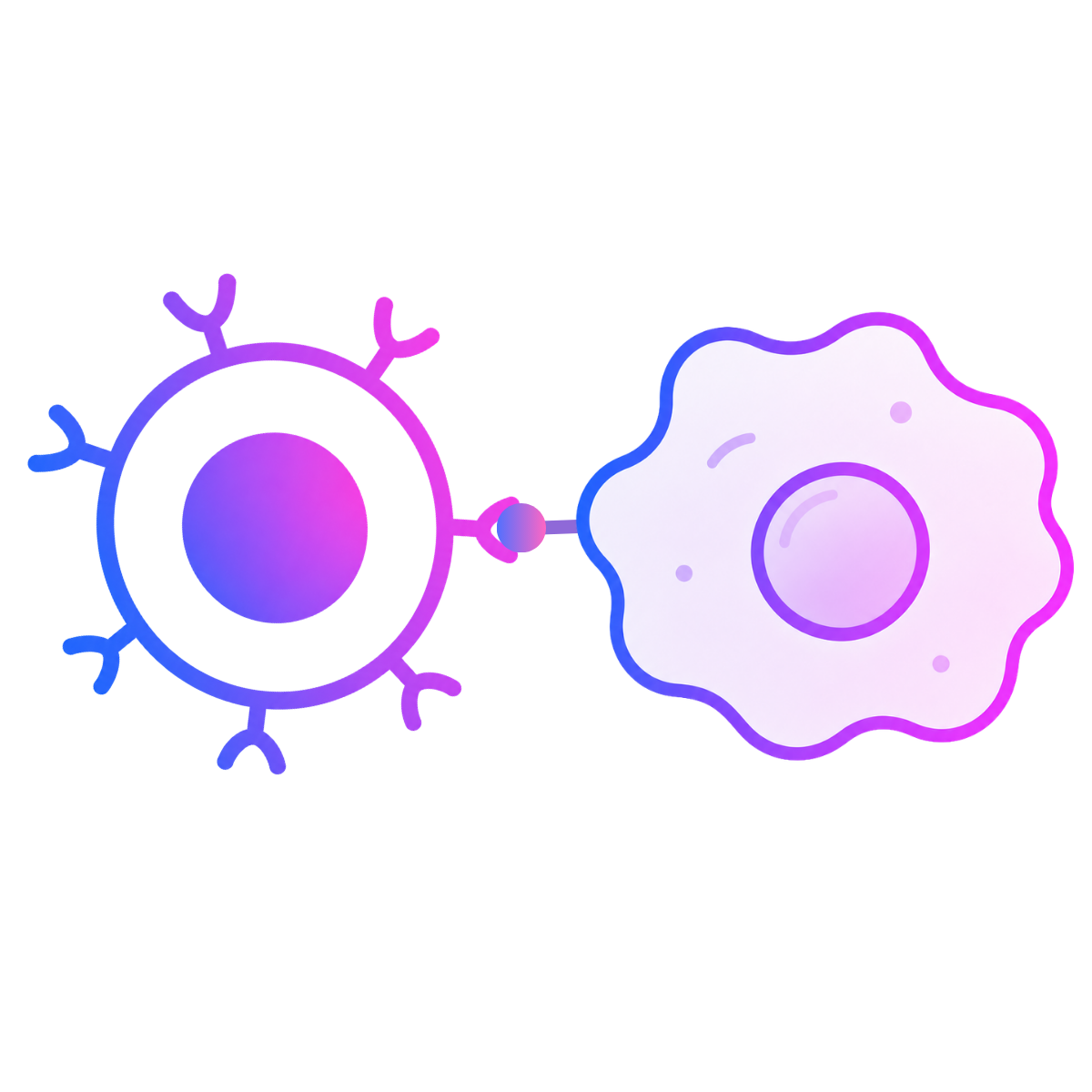
Communicate
Cells exchange signals through receptors, ligands, cytokines, and secreted factors.
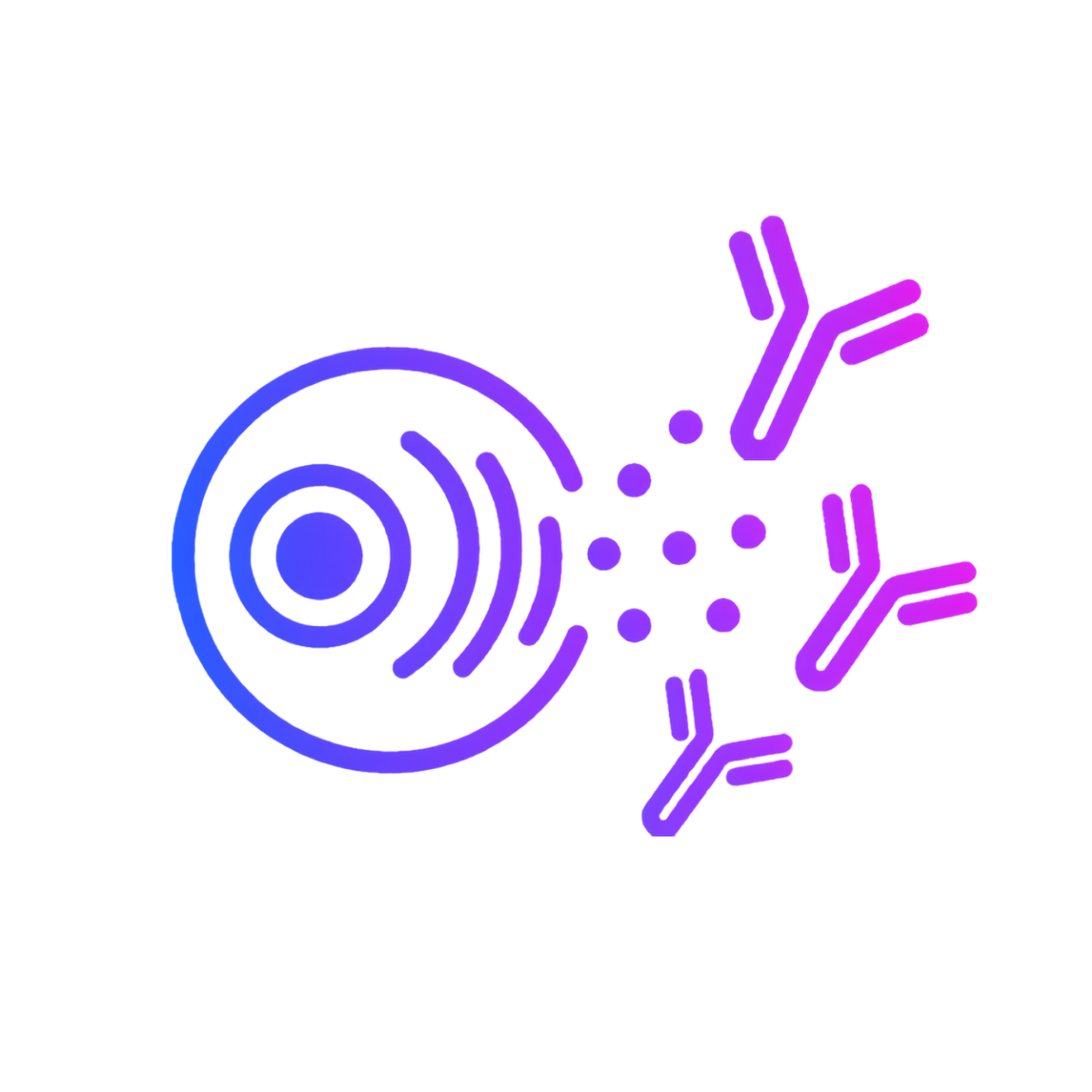
Respond
Interactions can trigger activation, secretion, killing, suppression, migration, proliferation, or changes in gene expression.
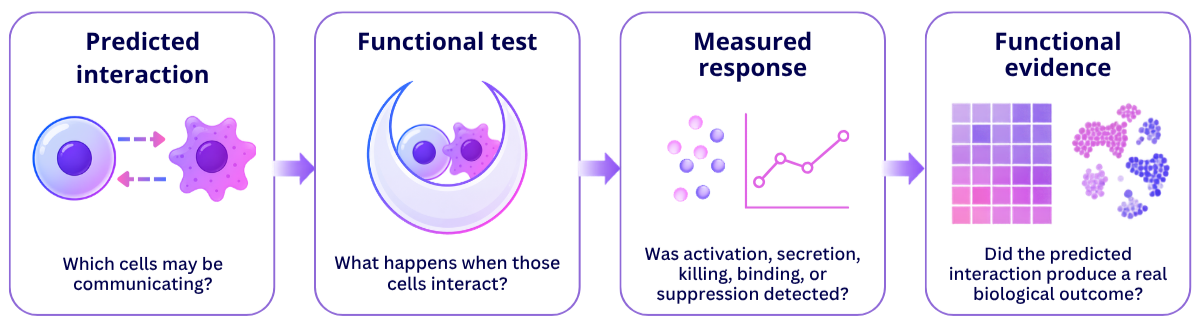
Cell-cell interactions, cell-cell communication, and functional data describe different parts of the same biological process.
Cell-cell interactions describe the broader biological process, cell-cell communication describes how influence is transmitted, and functional cell-cell interaction data captures the measurable responses and outcomes that result.
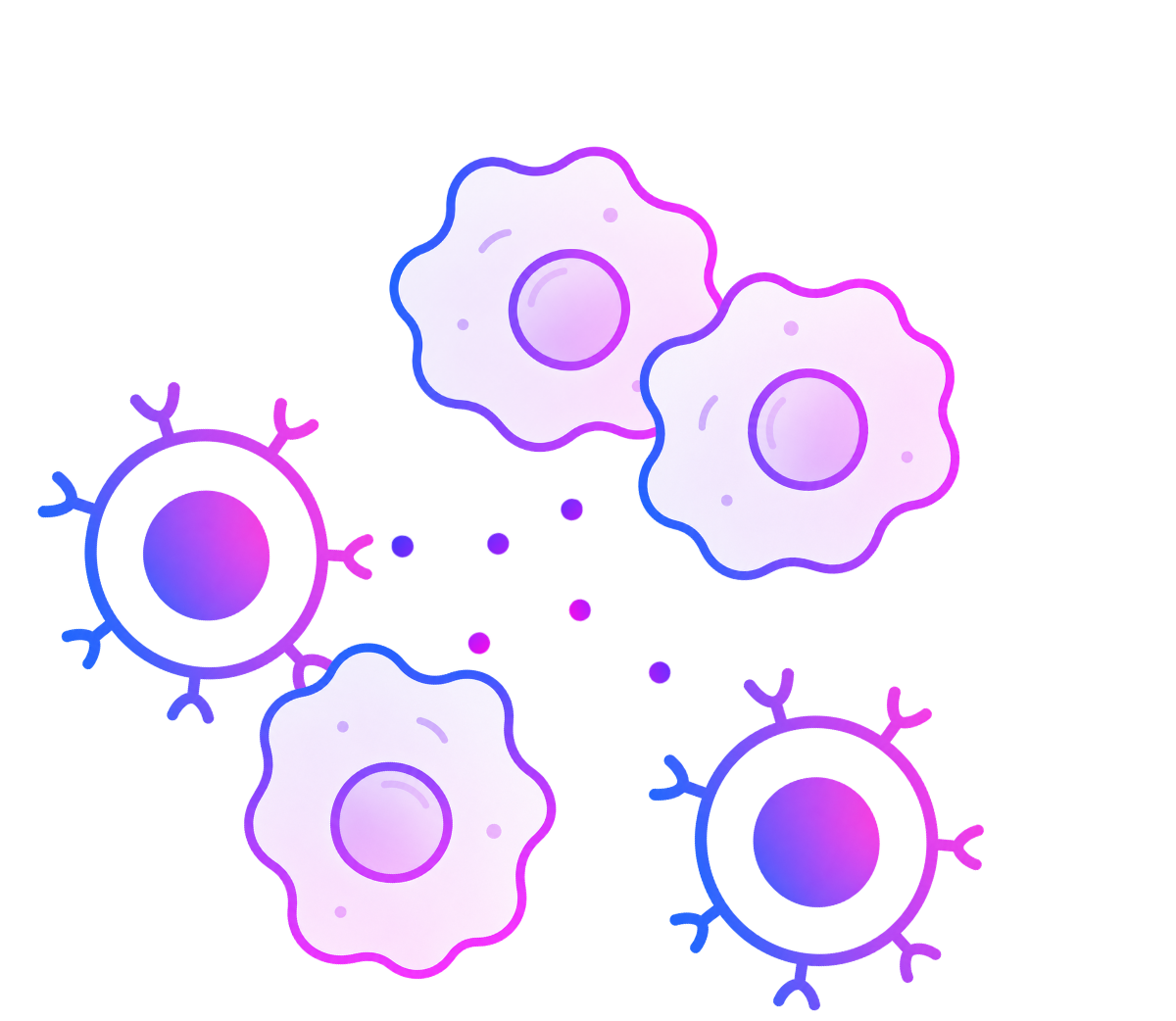
PROCESS
Cell-Cell Interactions
The broad ways cells influence one another through contact, signaling, recognition, or functional response.
MECHANISM
Cell-Cell Communication
The specific molecular signals cells exchange through receptors, ligands, cytokines, or secreted factors.
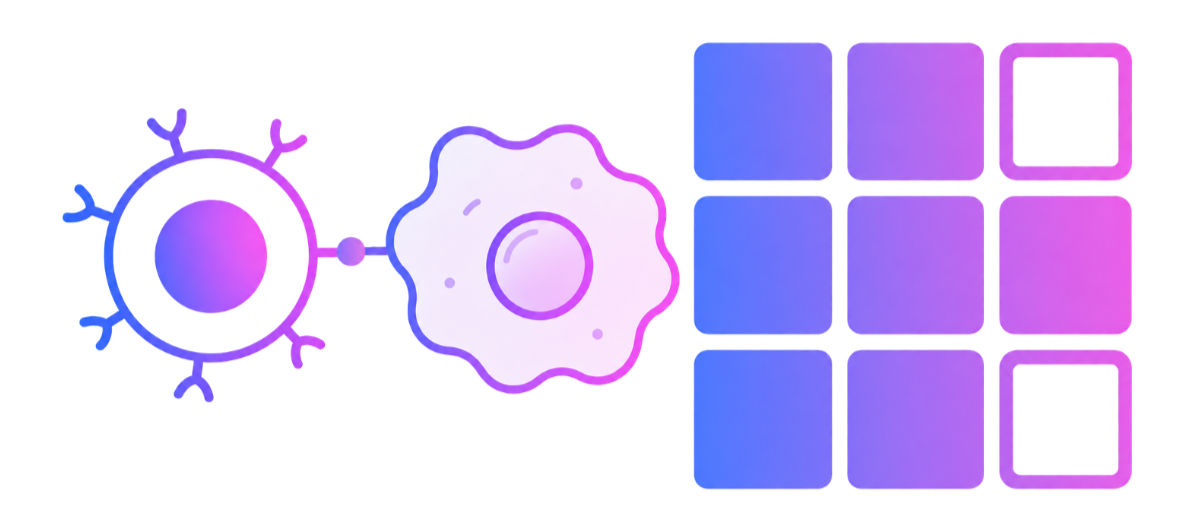
OUTCOME
Functional Interaction Data
Measured biological outcomes that show the real-world impact of cells interacting, such as activation, secretion, killing, suppression, or gene expression changes.
How are cell-cell interactions studied?
Studying cell-cell interactions requires moving from broad cell mapping to direct functional measurement. Today, researchers study cell-cell interactions across a five-step continuum: moving from cataloging single cells and predicting potential contact, to directly measuring defined pairs and translating those insights into engineered therapies.
| What We Can Do Today | What We Learn | Example Technologies |
|---|---|---|
.png) 1. MAP CELLS
1. MAP CELLS
|
What is each cell's state and identity? | Single-cell RNA/protein profiling, perturb-seq, cell atlases |
 2. MAP CONTEXT
|
Where are cells, and which cells are nearby? | Spatial transcriptomics, multiplex imaging, in situ profiling |
 3. INFER POSSIBLE COMMUNICATION
|
Which cells may communicate, and through what pathways? | Ligand-receptor inference, cell-cell communication models, neighborhood analysis |
.png) 4. MEASURE DEFINED INTERACTIONS
The Missing Layer
4. MEASURE DEFINED INTERACTIONS
The Missing Layer
|
How does a specific cell pair change each other, and with what molecular and functional outcomes? | Nanovial-enabled cell-cell interaction assays such as Cell-Cell-seq (functional readouts, sorting, recovery, sequencing) |
.png) 5. TRANSLATE & ENGINEER
5. TRANSLATE & ENGINEER
|
How can we predict, control, and therapeutically modulate these interactions? | Mechanistic models, AI/ML, target discovery, therapeutic design, precision cell therapies |
While foundational single-cell and spatial technologies excel at showing where cells are located and predicting potential signaling pathways, they cannot confirm direct functional outcomes. Nanovial-enabled cell-cell interaction assays bridge this critical gap by isolating defined cell encounters, linking physical contact directly to functional readouts, live-cell sorting, and downstream sequencing before feeding actionable data into predictive models.
What questions can functional cell-cell interaction assays help answer?
Functional cell-cell interaction assays can help researchers connect defined cell encounters with measurable outcomes across immune profiling, perturbation screening, therapeutic discovery, and cell therapy workflows.
These assays can measure outcomes such as activation, secretion, binding, killing, suppression, growth, viability, gene expression, and downstream sequencing.
How Nanovials measure cell-cell interactions
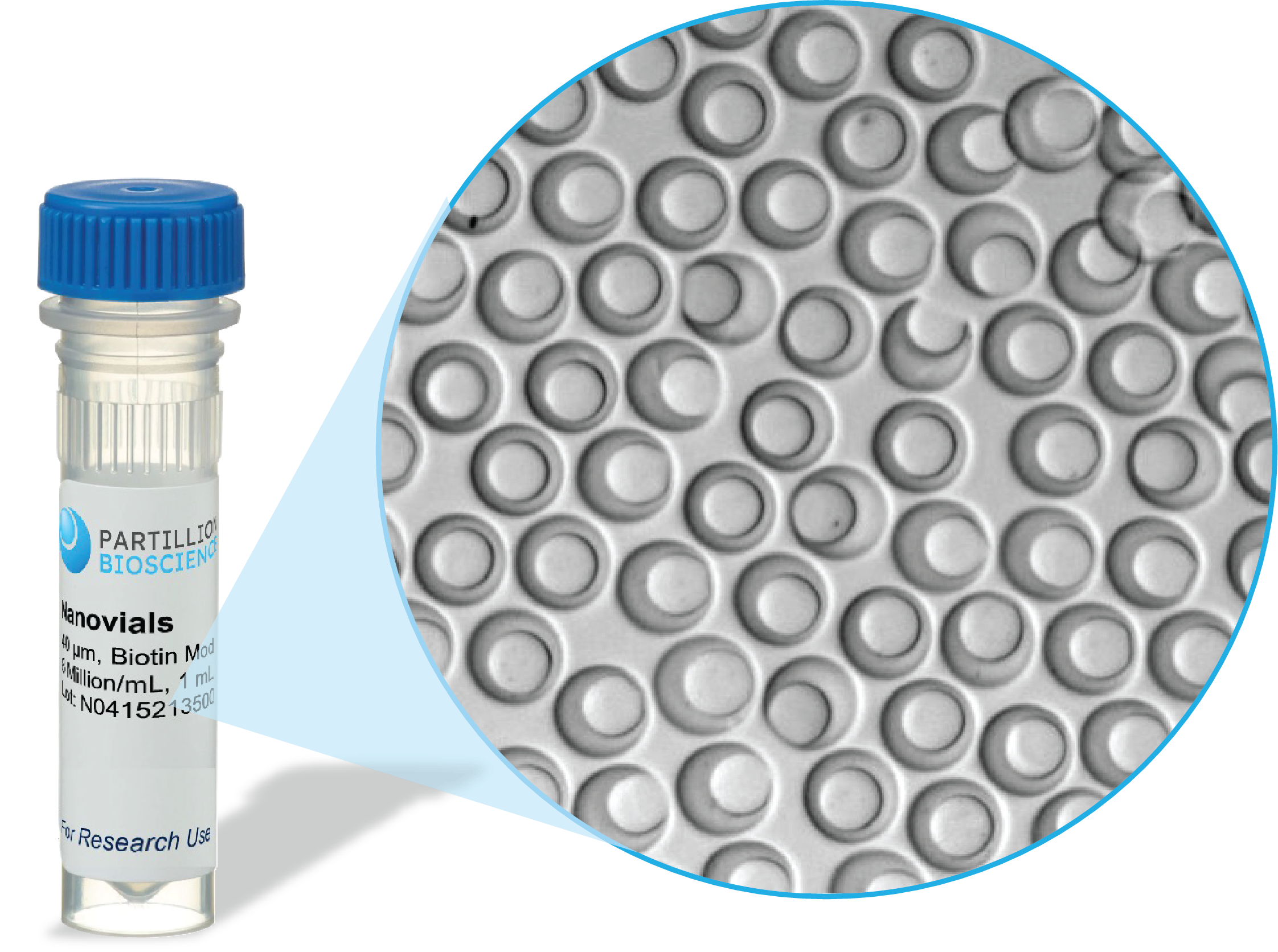
Nanovials create defined microenvironments where cells can interact, respond, and be analyzed based on functional readouts. This helps researchers connect interaction context with measurable outcomes and downstream biological data.
Learn more about Nanovial cell-cell interaction workflows
Cell-cell interactions can be studied from different starting points, whether you are learning the technology, designing a functional assay, connecting readouts to sequencing, or reviewing published examples.

Explore cell-cell interaction data
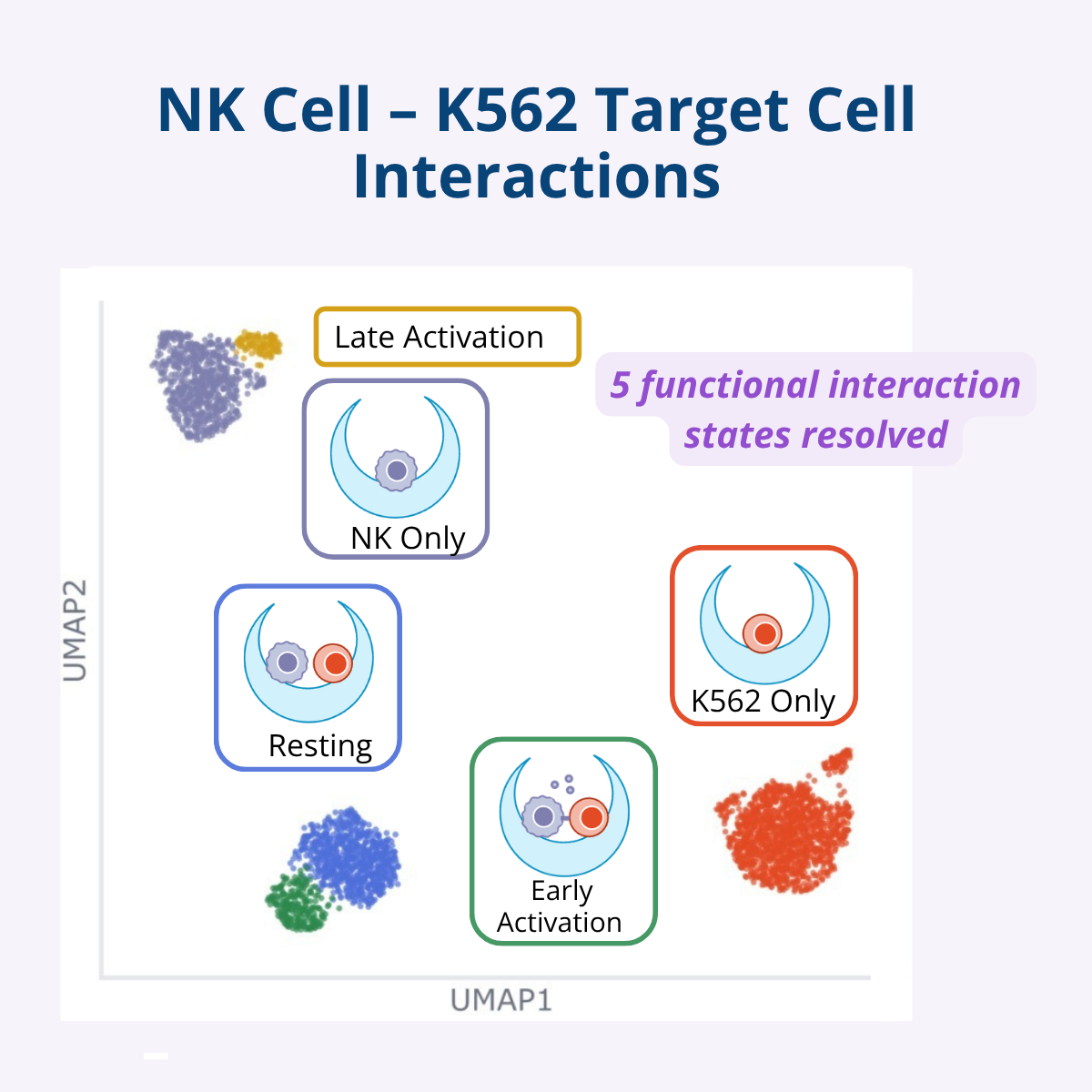
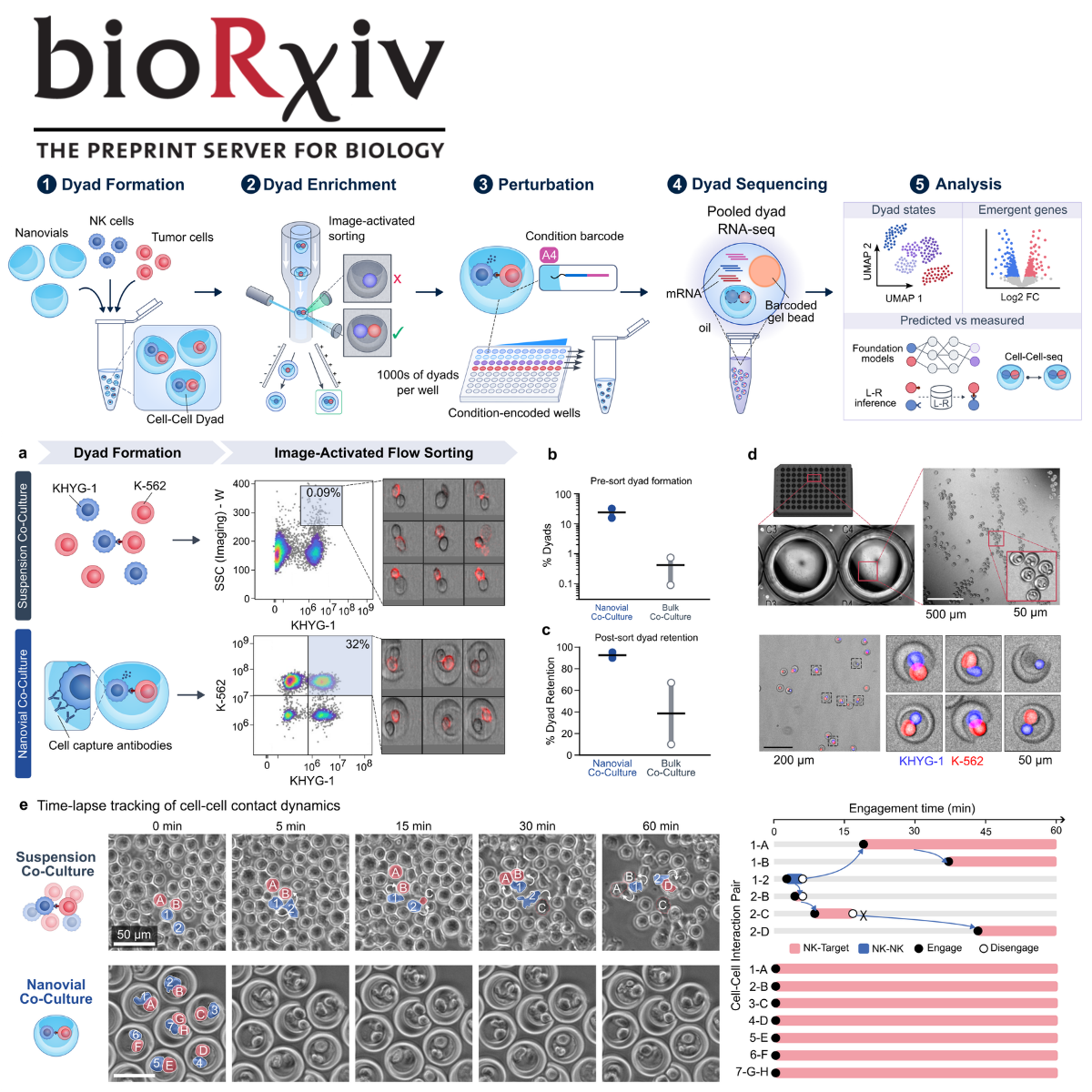
NK cell-tumor interactions
Resolve resting and activated NK-tumor interaction states, cytotoxic programs, and checkpoint-associated biology.
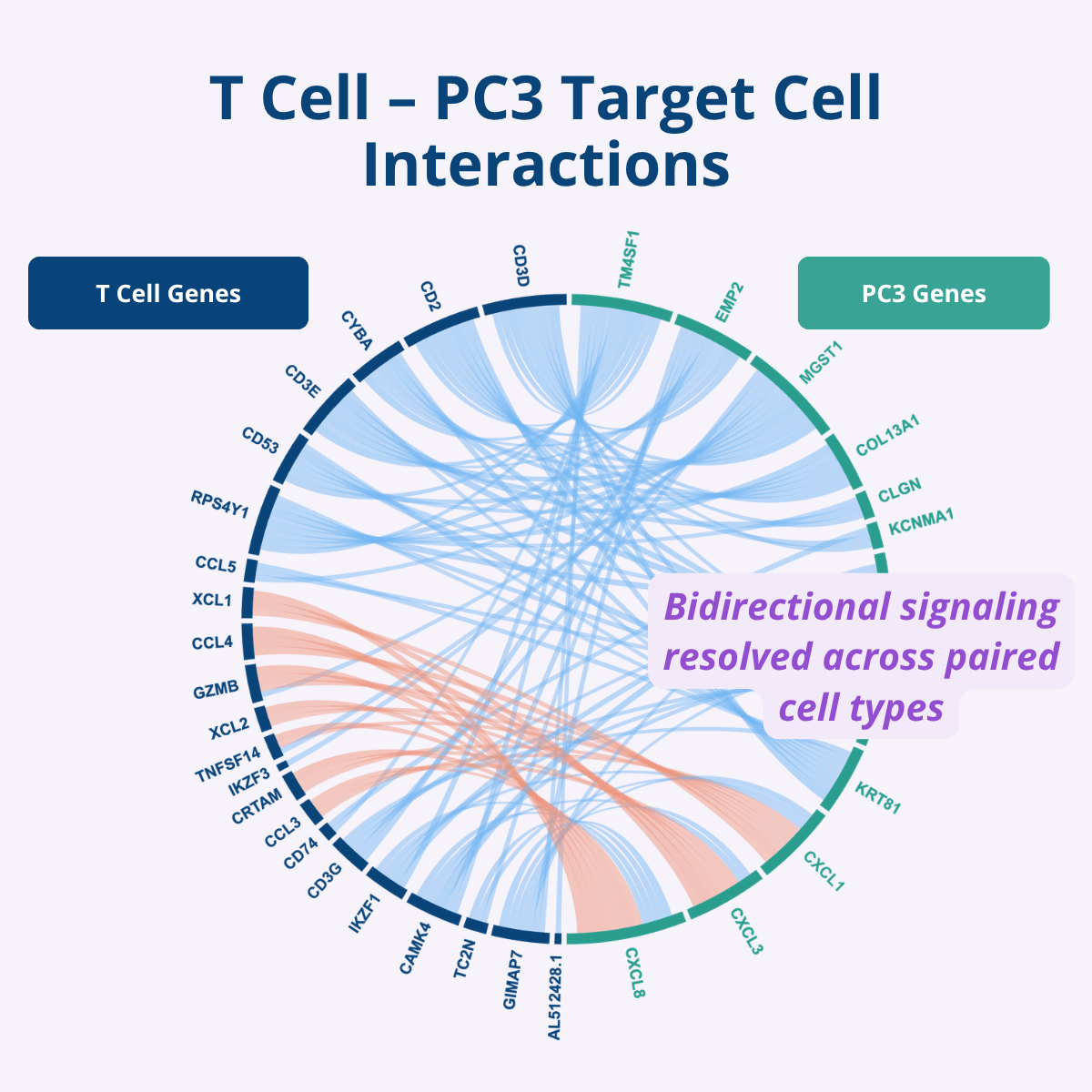
T cell-tumor interactions
Measure contact-dependent activation, bidirectional signaling, and paired transcriptional responses.

Apply cell-cell interaction data to therapeutic discovery
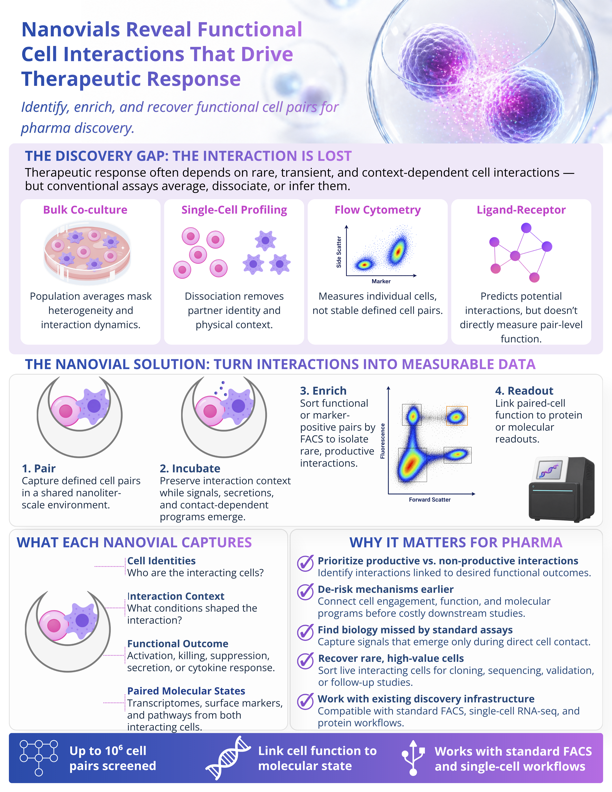
See how Nanovials can help researchers identify, enrich, and recover functional cell pairs in workflows relevant to therapeutic response, mechanism, and downstream molecular insight.
FAQs
-
A functional cell-cell interaction assay is useful when the key question is not only whether cells are present or predicted to communicate, but whether an interaction produces a measurable biological outcome. This can include activation, secretion, killing, suppression, binding, or downstream molecular changes.
-
Preserving interaction context helps connect a measured response to the cells that produced it. When cells are dissociated, averaged, or analyzed only as individual profiles, partner identity and interaction-dependent behavior can be lost.
-
Cell-cell interaction data can help researchers understand how cells influence one another across disease, validate predicted interactions, and connect functional responses to downstream biology. This can support more informed drug design, therapeutic development, and foundation or virtual cell models that better reflect how biology happens between cells.
-
Traditional co-culture assays can show population-level responses, but they may not preserve which cells interacted or which cells produced a specific response. Nanovials help create defined cell encounters so researchers can connect interaction context with functional readouts and downstream analysis.
-
Researchers should consider the interaction they want to study, the functional readout they need, whether live-cell recovery is important, and whether the cells will be analyzed by FACS, sequencing, molecular profiling, or another downstream workflow.

Design a functional cell-cell interaction assay
Connect with us to discuss Nanovial workflows for measuring functional cell-cell interactions and linking cell behavior to downstream biological data.