

Defined microenvironments for cell-cell interaction data.
Nanovials bring cells, assay reagents, and capture chemistry together in suspendable microenvironments, enabling researchers to measure the signals, responses, and outcomes that emerge between cells.
Core platform capabilities

Defined microenvironments
Co-localize cells, assay reagents, and capture chemistry in suspendable Nanovials designed to preserve cell-cell context.

Interaction-driven readouts
Measure the signals that emerge between cells, including secretion, binding, activation, suppression, killing, and other functional responses.
Flow-based sorting & recovery
Analyze and sort cells or cell pairs using standard flow cytometry workflows, then recover cells of interest for downstream analysis.
Nanovials create cells-in-context assays
Nanovials create a shared assay space that keeps cell pairs, capture chemistry, and interaction-driven signals in close proximity. Cells are co-localized within a suspendable Nanovial, while assay reagents capture secreted proteins, binding events, and other functional signals generated during cell-cell communication. Because these signals stay associated with the Nanovial, cell-cell responses can be analyzed using standard flow cytometry workflows and recovered for further characterization or sequencing.

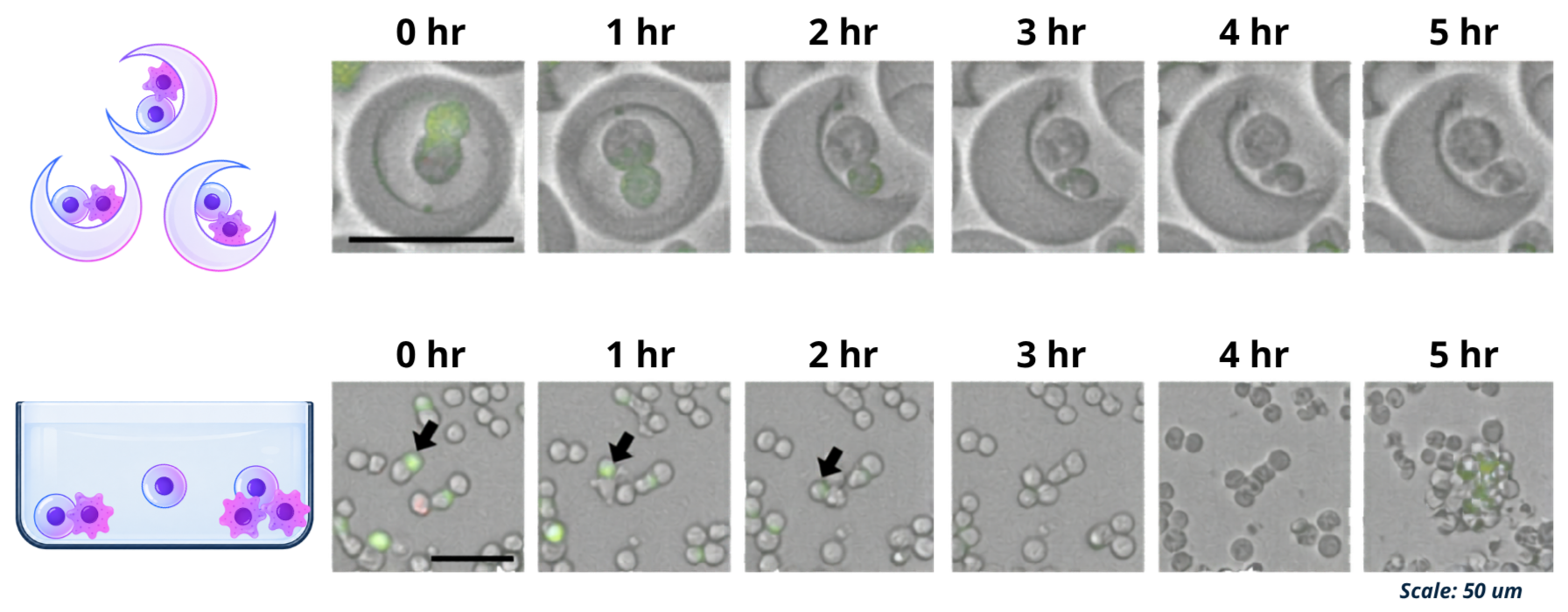
When cell-cell contact is established at a defined timepoint, functional responses can be measured with greater confidence. Nanovials help maintain stable cell pairs over time, making it easier to connect observed signals to sustained interactions rather than transient collisions.
Stable interactions. Clearer biology.
Connect cell-cell interactions to gene expression
Nanovials can pair cells, preserve interaction context, and enable functional responses to be linked with gene expression programs across thousands of cell pairs. By connecting interaction-driven signals with transcriptional profiles, researchers can uncover molecular programs associated with productive cell-cell communication.
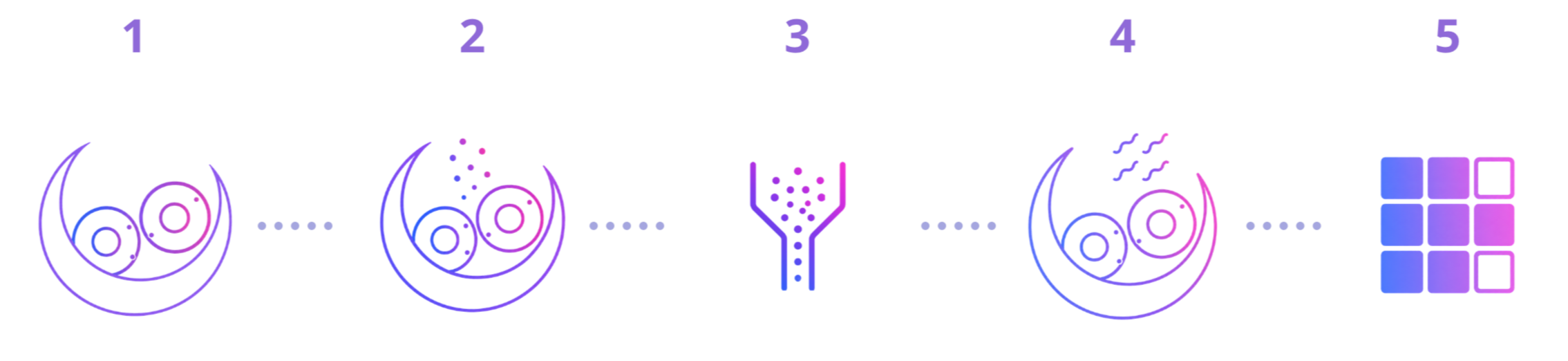
1. Pair cells
Create defined cell pairs with known partner identity.
2. Measure function over time
Track interaction-driven responses after cell contact is established.
3. Enrich pairs of interest
Select productive or phenotypically relevant pairs based on observed function.
4. Sequence
Profile gene expression from paired cells using standard single-cell sequencing workflows.
5. Map gene programs
Identify interaction-induced transcriptional programs and signaling relationships.
Power the next generation of cell biology
Cell Atlases and Virtual Models
Add relationship, context, and response to single-cell datasets for more realistic and predictive models.
Functional immune profiling
Measure activation, suppression, cytokine secretion, binding, killing, and other responses in paired or multicell contexts.
Therapeutic Discovery
Profile immune-target interactions, antibody secretion, binding, specificity, and recover cells of interest for downstream analysis.

Ready to generate the data that emerges between cells?
Whether you’re building models, discovering therapeutics, or advancing cell biology, Partillion is here to help.