

AI Biology & Foundation Models
The missing interaction data layer for biological AI
Models need examples of cells interacting, not just cell states.
Most single-cell datasets describe cells after they have been dissociated or removed from their interaction context. That makes it difficult for models to learn how one cell changes another through contact, signaling, killing, activation, suppression, or secretion.
Partner context is lost
Which cells interacted is often unknown.
Timing is missing
The duration and sequence of interaction are rarely captured.
Functional ground truth is limited
Predicted communication is not the same as a measured response.
The Nanovial data object
Nanovials turn cell-cell interactions into structured datasets
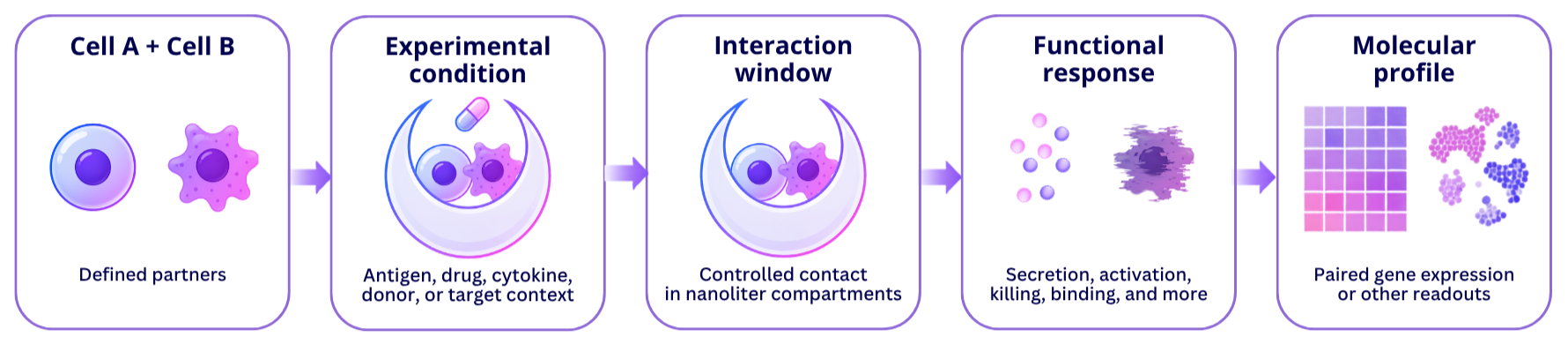
Nanovials pair defined cells in nanoliter-scale compartments and preserve the context of their interaction. Each dataset can connect the interacting cells, experimental condition, interaction window, functional response, and downstream molecular readout.
Ground truth for model training, benchmarking, and validation
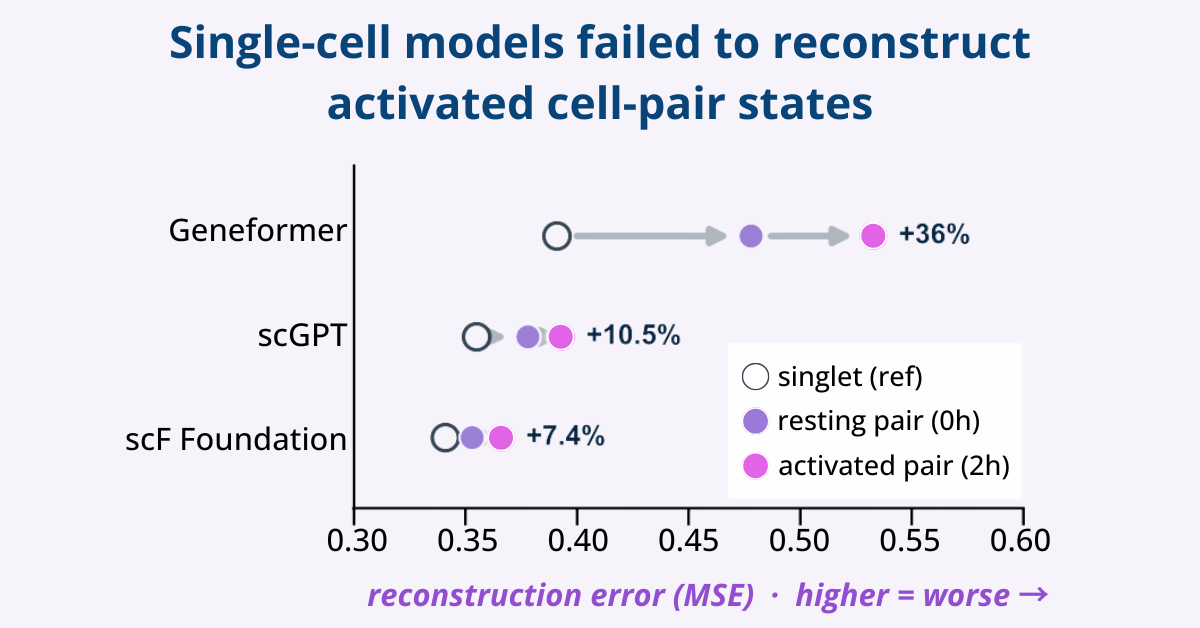
Nanovial datasets help AI biology teams test whether models can reconstruct, predict, or generalize measured cell-pair states.
Train Add interaction-aware examples to model development.
Benchmark Compare model predictions against measured paired-cell biology.

Validate Test predicted interactions in controlled experimental systems.
Datasets built around measured interaction states
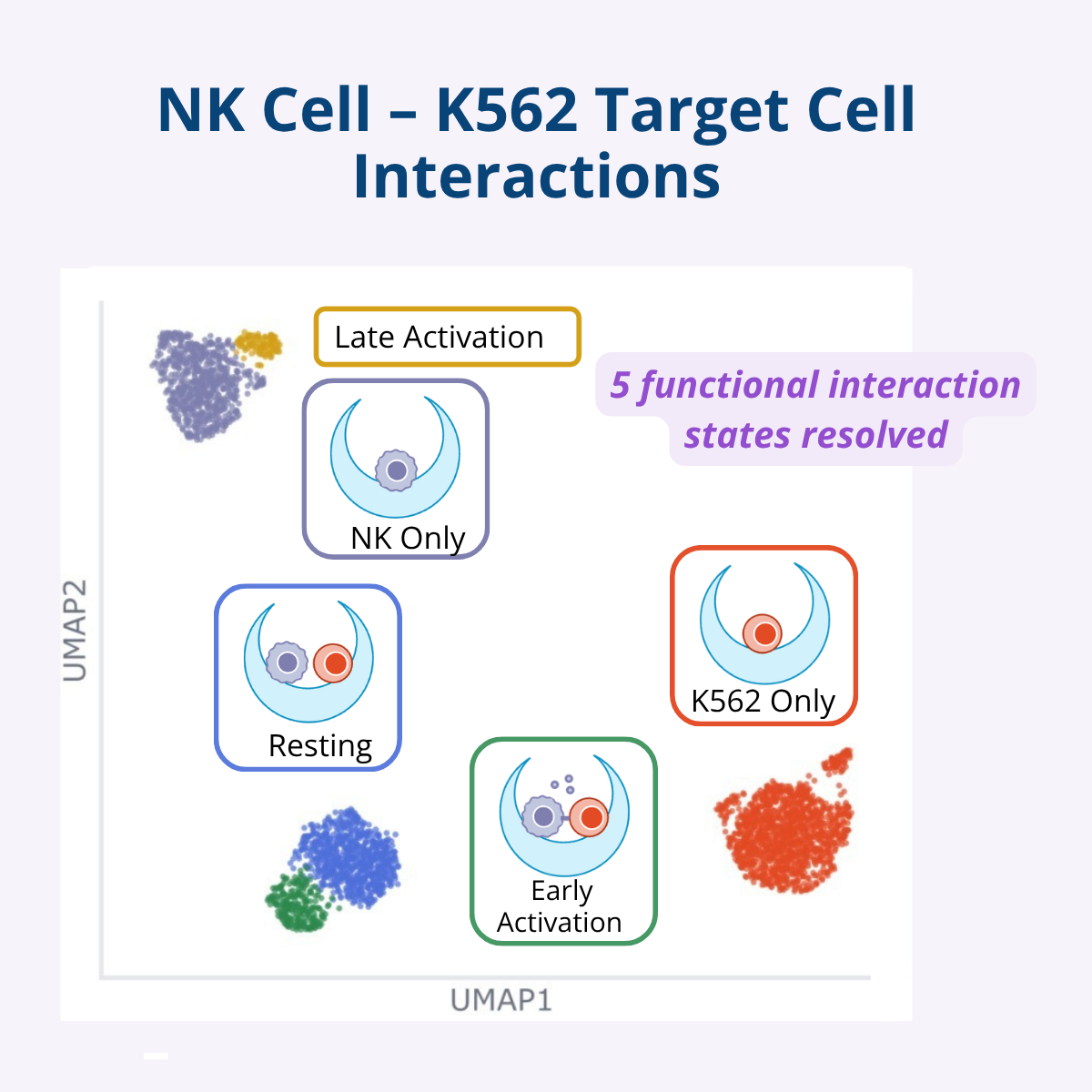
NK cell-tumor interactions
Resolve resting and activated NK-tumor interaction states, cytotoxic programs, and checkpoint-associated biology.
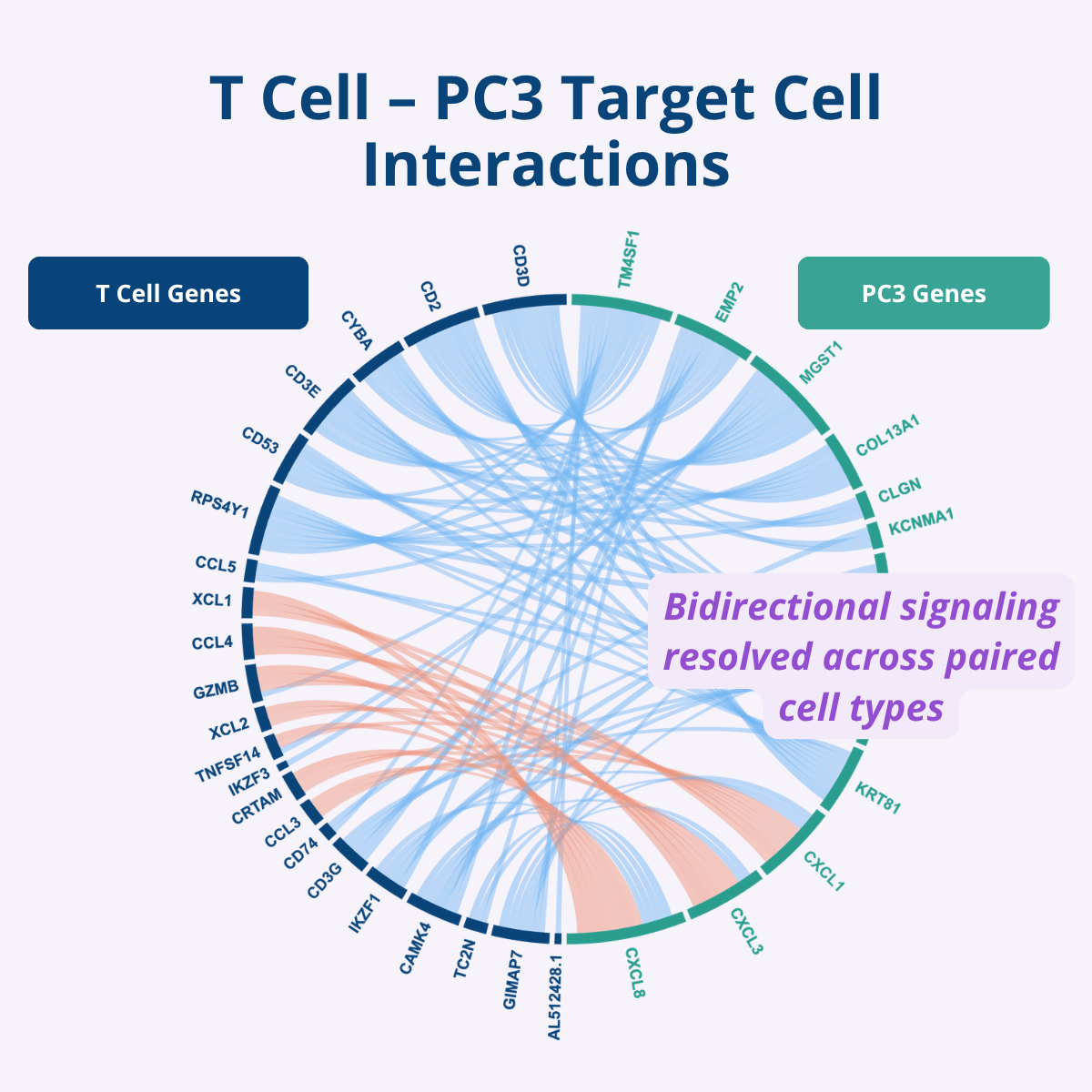
T cell-tumor interactions
Measure contact-dependent activation, bidirectional signaling, and paired transcriptional responses.

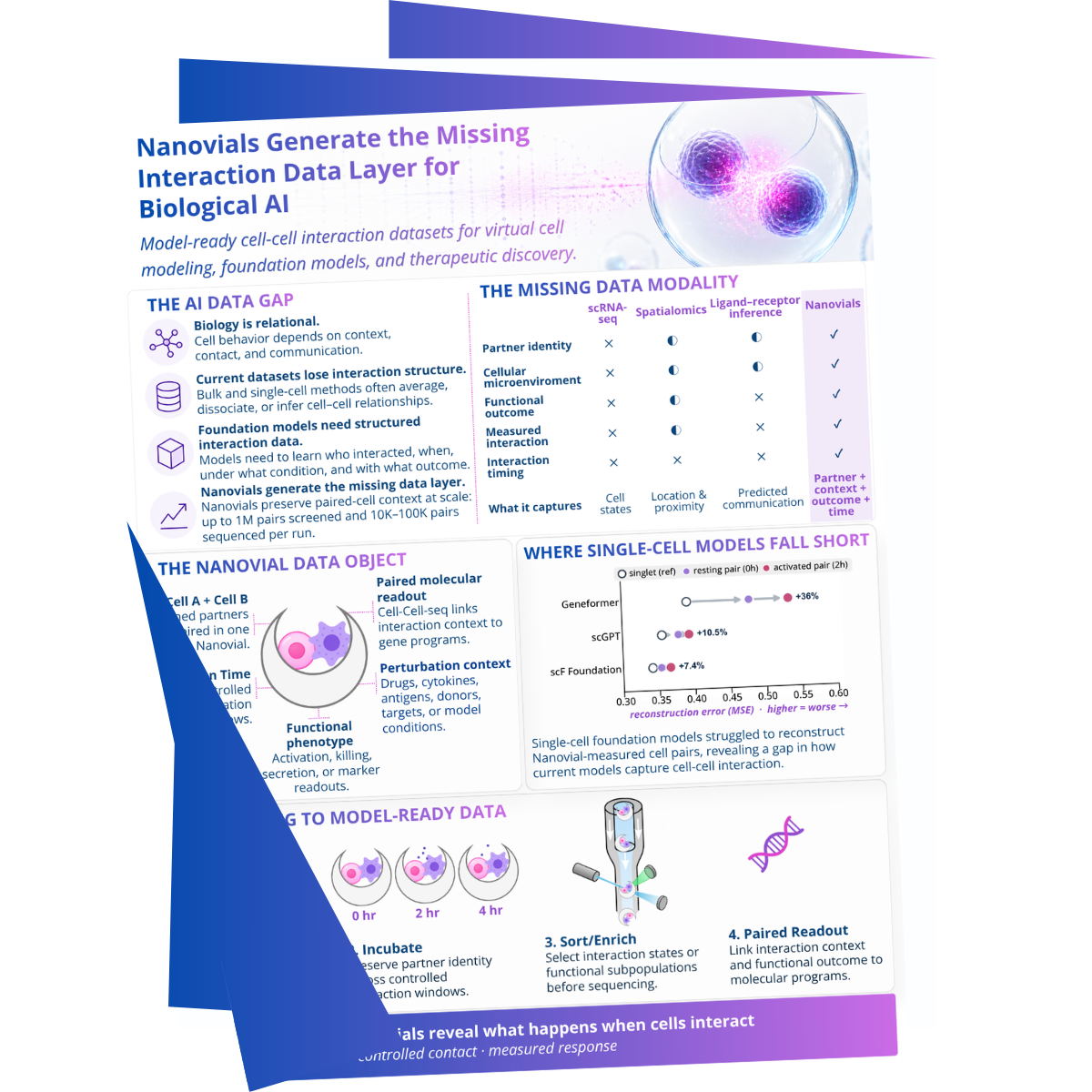
Download the AI biology data brief
A concise overview of the interaction data gap, Nanovial paired-cell datasets, model benchmarking, and example cell interaction systems.
FAQs: Cell-cell interaction data for biological AI
-
Nanovial interaction datasets are paired-cell datasets that link defined cell partners, interaction timing, perturbation context, functional response, and molecular readout.
-
Many biological responses emerge through contact, communication, and context. Cell-cell interaction data helps models learn biology that is not visible from isolated cell states alone.
-
Ligand-receptor analysis predicts possible communication. Nanovials measure defined interactions and connect them to functional and molecular outcomes.
-
Yes. Nanovial datasets can test whether models reconstruct or predict measured cell-pair states, especially activation, killing, secretion, and perturbation responses.
-
Examples include immune-tumor interactions, T cell activation, NK cell function, antibody discovery, cytokine signaling, suppression, killing, and therapeutic perturbation studies.
Access measured interaction data for biological AI
Explore example Nanovial datasets online or request full access to paired-cell data files for model training, benchmarking, and validation.